
MY STORY
Rebuilding my life and nervous system by learning to garden.
Sharing everything I learn, as I learn it.
WHERE THIS BEGAN
Hi, My name is Joanne. For years, I built my life around two things I believed in completely — education and healing.
By day, I worked in post-secondary education, supporting students, navigating systems, holding space for other people’s growth. In the hours around that, I trained as a yoga teacher and then as a yoga therapist, learning the science of the nervous system, the language of the body, the pathways back from stress and overwhelm.
I understood burnout intellectually, clinically, practically. I taught women to recognise it. I offered them the tools to recover from it.
And then, quietly and completely, it found me anyway.
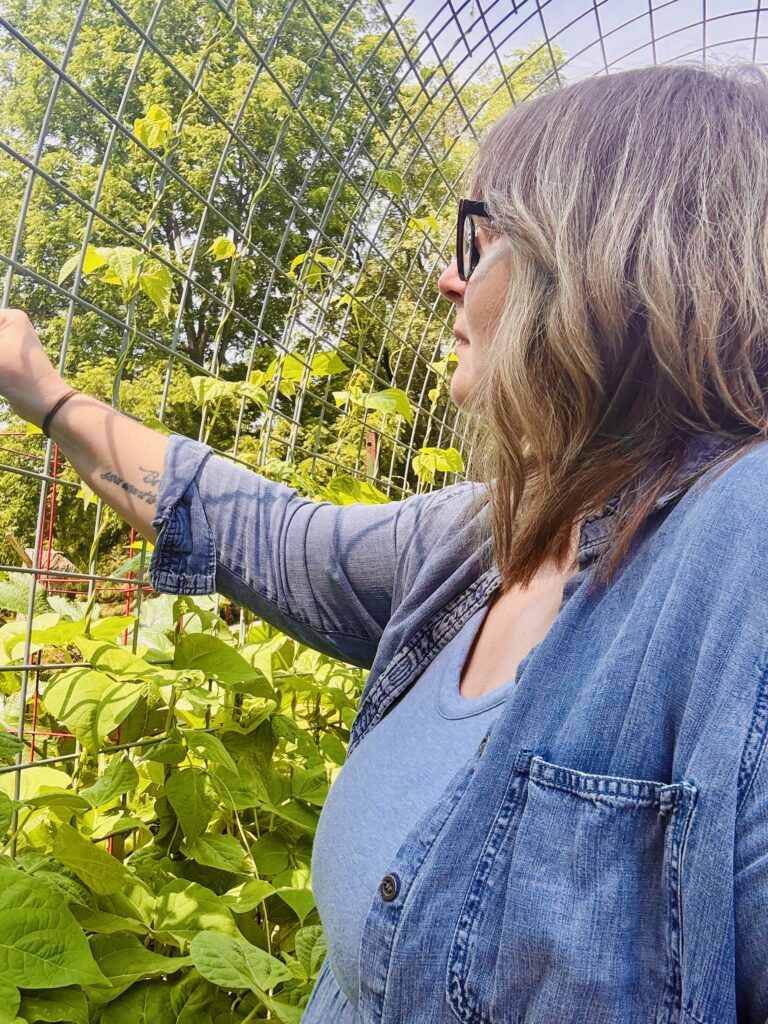
"The thing about burnout is that it doesn't care how much you know. It doesn't care about your training, your qualifications, or the classes you've delivered on stress and resilience."
ROOTED IN THE GARDEN
THE TURNING POINT
When I was laid off, the first feeling that surfaced was panic. Then, underneath it, relief.
Not because I wanted to lose my job, but because something in me had been quietly asking for rest for a long time. The layoff gave me a kind of permission I hadn’t been able to give myself. It gave me permission to finally stop, listen, and finally tend to the burnout I had been pushing past for years. After years in post-secondary education and countless hours on the mat, I was faced with the reality that underneath everything – I wasn’t protected. Knowing the signs didn’t mean I was safe from them.
“It arrives when a nervous system has given everything it has, for too long, without enough in return. That was me. Deeply, thoroughly, had-been-for-a-long-time burnt out.”
I spent years walking alongside students as they worked through academic overwhelm, and big questions about their future, supporting both their learning and their personal growth. I spent my spare time training in yoga and yoga therapy, learning how trauma lives in the body and how gently, carefully, it can be released. I thought that knowledge was a kind of armour.
It wasn’t. And And the particular humbling of being a healer who needed healing – an educator who had to unlearn the idea that knowing something is the same as being safe from it – is something I carry into every piece of content in this space.
GARDENING AS THERAPY
What brought me back wasn't a program.
It was my garden.
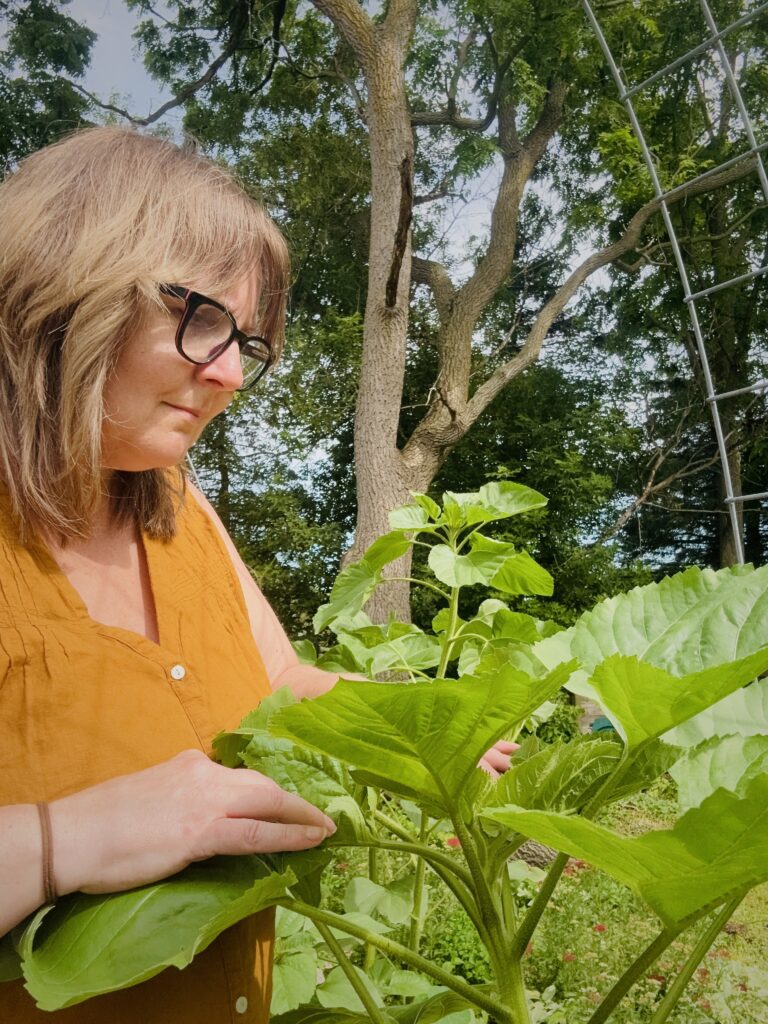
The spring of my layoff, I went outside because it was the one place that asked nothing of me. I didn’t go out there to heal — I went out there because I had nowhere else to put myself. But somewhere in the actual, physical work of it — kneeling in soil, pulling weeds, watering on a schedule that had nothing to do with my old one — I found something my training had never fully given me: a nervous system practice I didn’t have to think my way into. My hands just did it.
Although I have planted things for years, I genuinely, feel like I’m a beginner gardener. I’ve killed things. I’ve planted things that had no business surviving and watched them survive anyway. And I’ve come to understand that the learning itself — not just the finished garden, but the ongoing, humbling process of figuring it out — is the therapy. Every mistake is a nervous system regulated through doing rather than understanding. Every small success is proof that I can trust a slow process again.
Over time, without forcing it, I’m finding myself again through this work — one bed, one season, one honest failure at a time.
THE GARDEN AS TEACHER
The garden is teaching me what my training couldn't.
A garden doesn’t recover on a schedule. it doesn’t perform wellness or push through dormancy to prove it’s trying hard enough. It simply rests, receives, and – when the conditions are right – begins again. Learning to garden alongside my own nervous system recovery has taught me the same is true for me.
That permission was the thing I had never given myself. Not in post-secondary education, where the pressure to perform and produce was relentless. Not in my yoga practice, which had quietly turned into another way to achieve. The garden asked none of that. It just held me – and, slowly, taught me how to hold myself.
This is where I share both: what I’m learning about burnout, the nervous system, and coming back to yourself – and what I’m learning about gardening itself, as someone still very much learning it, because for me, these two thinsa re no longer separate. Not because I’ve arrives somewhere finished, but because I’m still becoming, one season at a time.
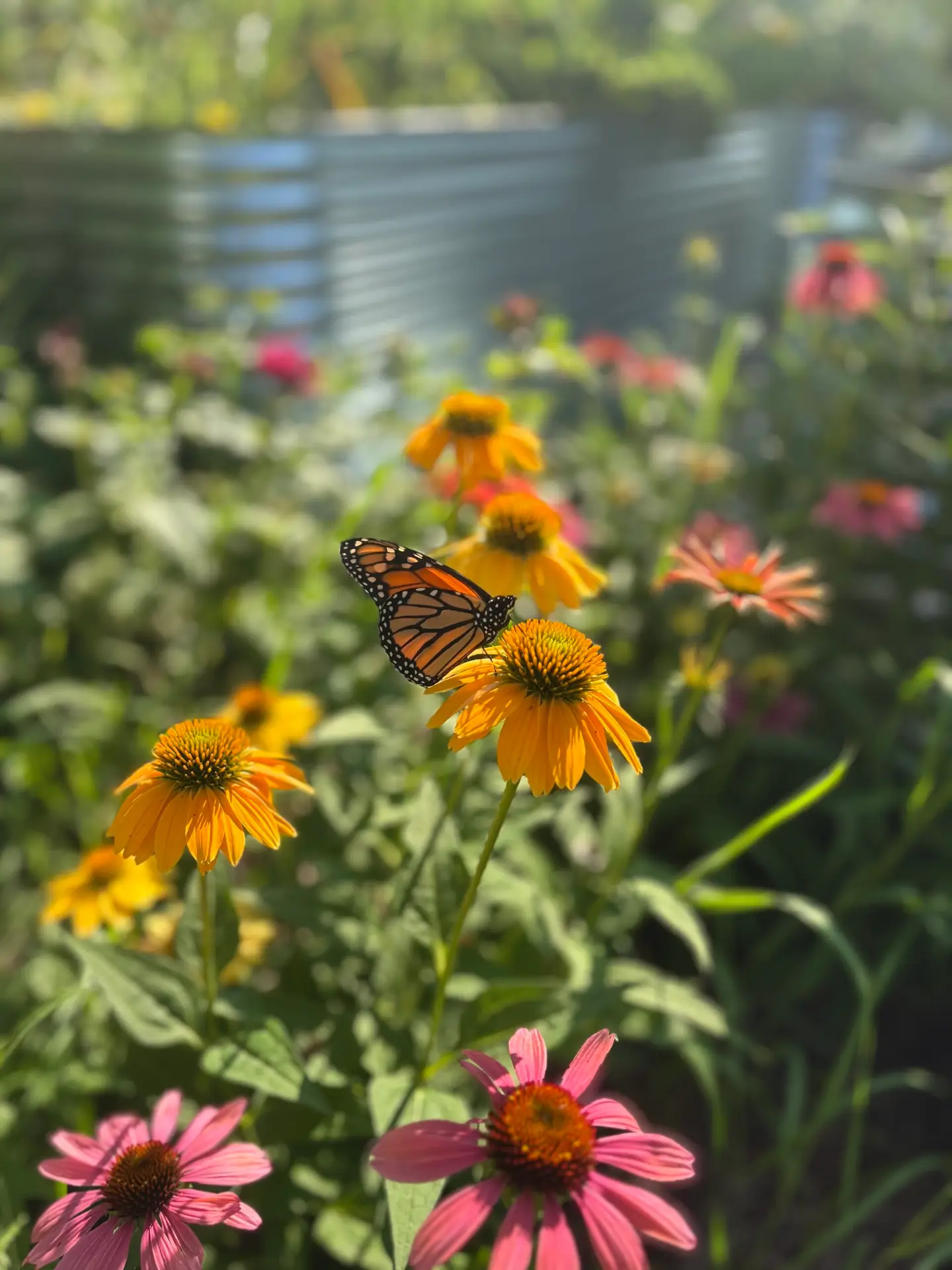
Rooted in the Garden was born from that experience.
It’s for every woman who has given too much for too long and lost herself somewhere in the middle of it. For the high-achievers and the caregivers, the helpers and the holders, the ones who knew all the right things and burnt out anyway.
This is not a space for pushing harder or recovering faster. It’s a space for tending — literally, with your hands in soil, and slowly, seasonally, learning what a garden has to teach you about your own pace.
You are not broken. You are fallow. And that is a very different thing.
A GENTLE PLACE TO BEGIN
The Quiet Season Guide
Burnout doesn’t always look like collapse—it often feels like disconnection, fatigue, and losing your sense of self.
The Quiet Season Guide offers three gentle, grounding steps to help you slow down, reconnect with yourself, and begin tending to what’s been quietly asking for your attention. No pressure to fix or figure everything out—just a soft return to your own rhythm.
Download the guide and take your first step home to yourself.