
Most of us have been using the words interchangeably for so long that the distinction has become invisible.
Stressed. Burnt out. Overwhelmed. Exhausted. We reach for these words to describe the same general territory of too much. And because the words have blurred together in our everyday language, something important has been lost — the understanding that stress and burnout are not the same thing. That they are not even the same category of experience. That they have different causes, different physiological signatures, and most critically, different paths to recovery.
Confusing them is one of the main reasons people spend years treating burnout with stress management techniques and wondering, why nothing is working.
This post is about the difference. Not as a clinical exercise, but because understanding precisely what you are dealing with is the prerequisite for actually being able to address it. You cannot tend a garden effectively if you do not know whether the plant in front of you is drought-stressed or root-bound. The symptoms can look similar. The interventions are completely different.
Stress — What It Actually Is
Stress, in its most fundamental form, is a response to demand.
When demands exceed your current resources, your nervous system activates. Cortisol and adrenaline enter the bloodstream. Thinking narrows to the immediate problem. The body mobilises everything it has toward meeting the demand. In its acute, short-term form, this is not only normal — it is functional. The stressed nervous system is doing exactly what it was designed to do.
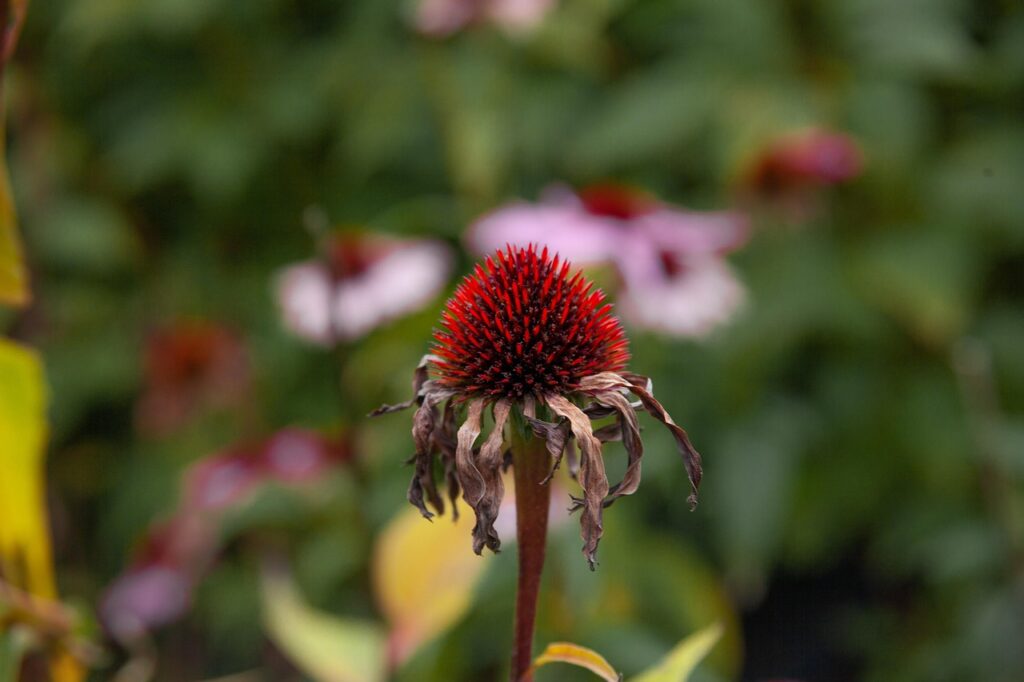
Think of stress as the garden in high summer — producing abundantly, drawing heavily on its reserves, fully activated toward the work of the season. But summer is temporary. Autumn follows. And in a healthy cycle, the intensity of summer is followed by the contraction of autumn and the rest of winter, during which everything consumed is replenished.
The critical feature of healthy stress is that it ends. The deadline passes. The crisis resolves. The nervous system returns to baseline. The resources replenish. Stress, in its healthy form, is seasonal — it comes and it goes, and the going is as important as the coming.
The complication: chronic stress. Chronic stress is what happens when the demand does not end. When the deadline is immediately replaced by the next one. When the pressure never fully releases and the nervous system never fully returns to baseline. The summer that goes on too long. And chronic stress, sustained for long enough, becomes something different.
It becomes burnout.
Burnout — What It Actually Is
Burnout is not a lot of stress. This is the most important clarification in this entire post.
Burnout is not a lot of stress. It is a different state entirely.
The clinical definition, developed by psychologist Christina Maslach and formally recognised by the World Health Organisation, identifies three distinct dimensions. Emotional exhaustion — the sense of being depleted beyond what rest can touch. Depersonalisation — the detachment from your work, your relationships, and your own sense of self. And reduced personal accomplishment — the growing sense of ineffectiveness and disconnection from meaning that develops when a person has been running on empty for too long.
None of these are features of stress. They are features of a system that has moved into a qualitatively different state — not characterised by activation, but by depletion. The resources are gone. There is nothing left to mobilise.
Chronic stress is the garden in drought — still alive, still trying, increasingly strained but still fighting. Burnout is the garden after the drought has gone on too long. The soil has given everything without replenishment. The plants are not fighting anymore — because fighting requires resource that is no longer available. They are simply there. Going through the motions of being alive without the vitality that makes life feel like life.
The stressed garden is tense. The burnt-out garden is empty.
And you cannot treat empty the way you treat tense.
The Four Real Differences — In Everyday Life
The difference between burnout and stress is not only physiological — it is experiential. Once you know what to look for, you can begin to distinguish them in your own experience.
Difference One — The Relationship With Rest
Stress: Rest helps. A good night’s sleep, a weekend away, a period of reduced demand — these make a genuine difference. The resources are depleted but not gone, and rest replenishes them. The stressed person returns from a holiday feeling genuinely better. The recovery mechanism is still functioning.
Burnout: Rest does not help — or not enough, or not in the way it once did. The burnt-out person sleeps eight hours and wakes exhausted. Takes a holiday and returns exactly as depleted as when she left. Has a day off and spends it consumed by guilt and restlessness rather than restoration. The recovery mechanism is not functioning normally because the system is not merely depleted — it is exhausted at a level that rest alone cannot reach.
Think of a plant that needs water versus a plant that needs complete soil restoration. Watering the first will revive it. Watering the second will make the surface look slightly better but will not address what is fundamentally wrong underneath. Rest is necessary for burnout — but not sufficient.
Difference Two — The Quality of Exhaustion
Stress: The exhaustion of stress is primarily physical and cognitive. The body is tired, the mind overwhelmed. But the self — the sense of who you are, what you value — remains essentially intact. A stressed person knows who they are. They can imagine feeling better. The future exists as a real concept.
Burnout: The exhaustion of burnout goes deeper. It reaches into the self. Burnt-out people feel not only physically depleted but existentially so. They have lost the thread of who they are outside of what they do. They cannot imagine what they would enjoy because they cannot currently feel enjoyment. The future has collapsed into the immediate present of getting through.
Stress takes your energy. Burnout takes your sense of self. The stressed garden knows it is a garden. The burnt-out garden has lost access to its own nature.
Difference Three — The Emotional Signature
Stress: Stressed people feel a great deal — urgency, pressure, anxiety, frustration. The emotional life is active, sometimes uncomfortably so. The predominant experience is: there is too much and I cannot keep up.
Burnout: Burnt-out people frequently feel very little. The predominant experience is not overwhelming feeling but a troubling absence of it. Numbness. Flatness. The sensation of watching your own life from slightly outside it. Things that should move you — a beautiful evening, a moment of connection — arrive muted, as though through glass.
This emotional flattening is one of the most frightening features of burnout, because it feels like losing something essential about yourself. Nothing has gone permanently wrong. The nervous system has reduced the metabolic cost of emotional processing as a conservation measure. The feeling will return when the system is restored. But the absence of feeling is one of the most reliable signs that what you are experiencing is burnout rather than stress.
The stressed garden is full of frantic activity. The burnt-out garden is still. The flowers are not open — not because they cannot bloom, but because the system that powers blooming has temporarily gone offline.
Difference Four — The Response To Solutions
Stress: Stress management techniques work for stress. Time management, boundary setting, sleep hygiene, mindfulness, recovery time — these address the fundamental imbalance between demand and resource. Reduce the demand or increase the resource and the system rebalances. The intervention works.
Burnout: Stress management techniques do not work for burnout. This explains why so many burnt-out women spend years doing all the right things and feeling no better. A burnt-out person can implement a perfect morning routine, exercise regularly, set firmer boundaries, and still feel exactly as depleted six months later — because none of those interventions address what burnout actually is.
Burnout is not a demand-resource imbalance that can be corrected by adjusting the variables. It is a system depleted beyond the point at which normal recovery mechanisms function. What it requires is not management. It is restoration. And restoration is slower, more fundamental, and completely different from anything that works for stress.
You cannot manage your way out of burnout. You have to tend your way out of it.
This distinction — between managing and tending — is at the heart of my Rooted in the Garden work. Managing implies control, efficiency, the application of the right technique to produce the desired result. Tending implies relationship, patience, seasonal attention, the willingness to work with the intelligence of what is already there. A stressed garden needs managing. A burnt-out garden needs tending.
Why The Confusion Matters
If you are burnt out and you believe you are stressed, you will apply stress management to a burnout problem. You will try harder, optimise more, implement better systems — and feel no better. And when you feel no better, you will conclude that you are doing it wrong, or that something is fundamentally wrong with you, or that you are simply beyond help.
None of those conclusions are true. The technique is not wrong and neither are you. The diagnosis is wrong. And a wrong diagnosis leads always to the wrong treatment.
This is why I call the first stage of recovery Root — because before any practice or protocol, what is needed is clarity. The honest, sometimes uncomfortable act of seeing what is actually here. Naming it accurately. Not minimising burnout with the softer label of stress. Not catastrophizing it as something permanent when what is present is a season — long and hard and exhausting, but a season nonetheless.
Naming it correctly is itself a form of tending. It is the gardener kneeling down, looking closely, and saying what she actually sees. And from that honest seeing, the right tending becomes possible.
So — Which One Are You In?
Here is a simple, honest way to locate yourself.
You may be in stress if: Rest genuinely helps, even a little. You can still feel the full emotional range including pleasure and anticipation. You know who you are outside of what you are going through. You can imagine feeling better.
You may be in burnout if: Rest does not help the way it once did. Your emotional life has gone quiet or flat. You have lost the thread of who you are outside of what you do. The exhaustion reaches into your sense of self, your capacity for meaning, your ability to feel.
You may be somewhere in between if: You recognise features of both. Genuinely exhausted beyond what rest is touching, but still with some access to feeling and some capacity to imagine recovery. This in-between territory is where many women live for a long time before tipping clearly into one or the other. It is also the territory in which early intervention matters most.
Wherever you are — in stress, in burnout, or in the difficult in-between — the most important thing you can do is see it clearly, name it honestly, and from that honest naming, begin the appropriate tending.
The Right Tending For Where You Are
If what you are experiencing is stress, the pathway forward involves addressing the demand-resource imbalance — setting boundaries, reducing load where possible, building in genuine recovery time. The management techniques that are designed for this problem will work, if applied honestly.
If what you are experiencing is burnout, the pathway is different. Slower. More fundamental. It begins with the Root stage — understanding what has happened, releasing the shame that compounds the depletion, creating the conditions in which genuine restoration can begin. It moves through the Tend stage — the slow, embodied, nervous-system-level work of restorative practice and teaching the body that the emergency is over. And it arrives, in its own season, at the Grow stage — the re-emergence of identity, meaning, and the life that is genuinely yours.
Neither pathway is quick. But they are different pathways, and knowing which garden you are tending determines whether the work you are doing is likely to help.
The gardener who mistakes a burnt-out garden for a stressed one will water it, feed it, deadhead it — and wonder why it does not respond. The gardener who sees the burnout clearly will do something entirely different. She will stop asking the garden to produce. She will rest the ground. She will tend the soil rather than the surface. She will wait, with patience and without demanding visible results, for the season to turn.
And it will turn. It always turns.
Because burnout is a season, not a sentence. And every season, given enough time and the right tending, eventually gives way to the next.
Your Next Step
Wherever you have located yourself in reading this post, I want to offer you a clear and gentle next step.
The Quiet Season Guide includes the first act of the Root stage — a self-assessment to help you see, clearly and without judgment, where you actually are. Not where you think you should be. Where you actually are, right now, in the soil of your real life. From that honest seeing, everything else becomes possible.
Download the free Quiet Season Guide
And if you would like a fortnightly companion as you navigate whichever season you are in — one insight, one practice, one prompt, delivered like a letter from someone who has tended this ground — The Garden Letter is waiting.
The right tending begins with the right seeing. And the right seeing begins here.
Rooted in the Garden is a wellness space for burnt-out women, built around the metaphor of the garden and the framework of Root, Tend, and Grow. Created by a yoga teacher and yoga therapist who has lived this journey herself.